Cast-Iron or Stainless-Steel Pan for Browning?
Cast-iron or stainless-steel pan for browning? Compare heat response, pan construction, and handling to choose a skillet suited to your cooking and burner.
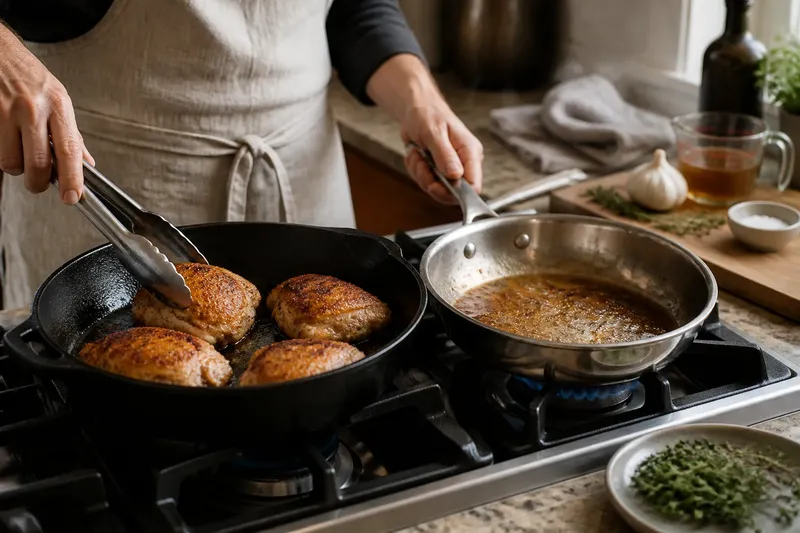
Cast-iron or stainless-steel pan for browning? The choice becomes clear when a piece of chicken hits the pan: cast iron tends to hold stored heat, while many stainless-steel pans respond more readily to a burner adjustment. The pan’s construction, the food, and how you handle it all shape which one suits the job.
Neither material browns food by itself. Browning depends on a hot cooking surface, food with limited surface moisture, and enough room for steam to escape. A pan is like a kettle of water: its contents and construction affect how quickly it changes temperature, not just the heat source beneath it.
What does heat response change when browning?
Heat response describes how quickly a pan warms or cools as the burner setting changes or food is added. Cast iron is dense and stores heat after warming. Stainless steel varies more: a clad pan may have an aluminum or copper core, while another model may have a different base construction.
When cold food goes into a pan, it draws heat from the cooking surface. Cast iron’s stored warmth can soften that temperature drop, especially if the pan has been heated evenly. Stainless steel can also retain heat, particularly when it has a thick base or conductive core, so the material name alone does not predict exactly how a pan will behave.
For stainless steel, check the product description or the pan itself for clues about construction, such as a layered body or a thick base. For either material, a flat bottom that matches the burner helps you heat the cooking surface more evenly.
How does stored heat affect browning?
As food warms, moisture escapes. If the cooking surface cools and the pan is crowded, liquid can collect and the food may steam before it browns. A pan with substantial stored heat can help keep the surface warm as food is added, but it cannot compensate for overcrowding or wet ingredients.
Cast iron is often chosen for searing steaks, chops, or thick vegetable slices because it holds heat once warmed. The result still depends on even preheating: a burner that heats only the center can leave the outer cooking area cooler.
Stainless steel can brown food well, too. It is especially useful when you want to loosen the browned bits left behind, called fond, with liquid and make a pan sauce. If food is packed tightly or liquid pools, cook in batches with either pan.
Which pan is easier to handle during a meal?
Many cast-iron skillets feel heavy when lifted, tilted, or carried while full. That weight can be manageable if the pan stays on the burner and you turn food with a spatula or tongs. It may feel awkward if you routinely toss vegetables or pour from the pan.
Stainless-steel pans also vary in weight. Handle shape, grip, and balance matter alongside the material; a helper handle can make a broad pan easier to move. Consider the motions your meal requires, not just how the empty pan feels.
Say you have a small batch of chicken pieces and want to make a sauce in the same skillet. You start with a stainless-steel pan that fits your burner, brown the chicken without crowding, then lift the pan to add liquid and loosen the fond. If the imagined cook instead wants to leave a larger piece of meat undisturbed on the burner and values a heavier, steady-feeling skillet, cast iron may better match that routine; the trade-off is more effort when lifting or pouring.
What should you compare before choosing a pan?
Use the observations below to connect a concrete feature to a decision. If an item points away from one pan, the alternative is not automatically better; check whether it suits the way you cook.
- Pan weight: Lift the empty pan and consider the weight of a meal in it; if tilting feels awkward, choose a lighter model, otherwise keep both options in consideration.
- Pan construction: Check whether stainless steel is clad or has a thick base; if you want a pan that holds heat steadily, compare those details with cast iron, otherwise prioritize handle and burner fit.
- Burner fit: Set the pan on the intended burner and check that it sits flat and the burner is not much smaller than its base; if the fit is poor, select a better-matched pan or use a suitable burner.
- Cooking movement: Identify whether you will toss, tilt, drain, or carry the pan; if you need frequent movement, favor the model you can control comfortably, otherwise a heavier stationary pan may suit the task.
- Meal sequence: Check whether the recipe moves from browning to a pan sauce; if you want to deglaze fond, choose a pan whose surface and care instructions suit that use, otherwise compare pans by searing and handling needs.
- Care and compatibility: Read the maker’s directions for seasoning, cleaning, oven use, and stovetop compatibility; if a pan conflicts with your cooking surface or routine, choose a compatible alternative.
Which questions help settle the cast-iron or stainless-steel pan choice?
Does cast iron always brown better than stainless steel?
No. Cast iron can hold stored heat, but stainless steel can brown food when it is heated appropriately and the pan is not crowded. Construction, burner fit, food moisture, and technique also matter.
Why does food stick to stainless steel?
Food may cling if it goes into the pan before the surface and cooking fat are ready, or if you try to move it before a browned surface forms. Use attentive heat and allow the food time to release; browned residue can also contribute flavor to a pan sauce.
Is a heavier pan better for searing?
Weight can accompany heat retention, but it does not tell you by itself how evenly a pan heats or how comfortable it is to use. A lighter pan that fits your burner and grip may be the more practical choice.
Can either pan go from the stovetop to the oven?
Sometimes, but handles, coatings, lids, and construction can limit oven use. Check the manufacturer’s instructions for the specific pan before transferring it.
Which trade-off matters most in your kitchen?
For a cast-iron or stainless-steel pan for browning, weigh heat response against the way you move the pan through a meal. Cast iron offers a substantial feel and stored heat; stainless steel varies by construction and may be easier to maneuver. Either can suit browning when the pan fits the burner, the food has room, and you can handle it confidently.
Before choosing, consider the meal you cook most often and imagine the pan full, not empty. If lifting it to pour would be uncomfortable, that practical detail deserves more weight than a possible advantage in heat retention.