Why Pasta Water Helps a Sauce Cling
Why pasta water helps a sauce cling: learn how starch-rich water brings fat and liquid together, and how gradual additions keep the texture supple.
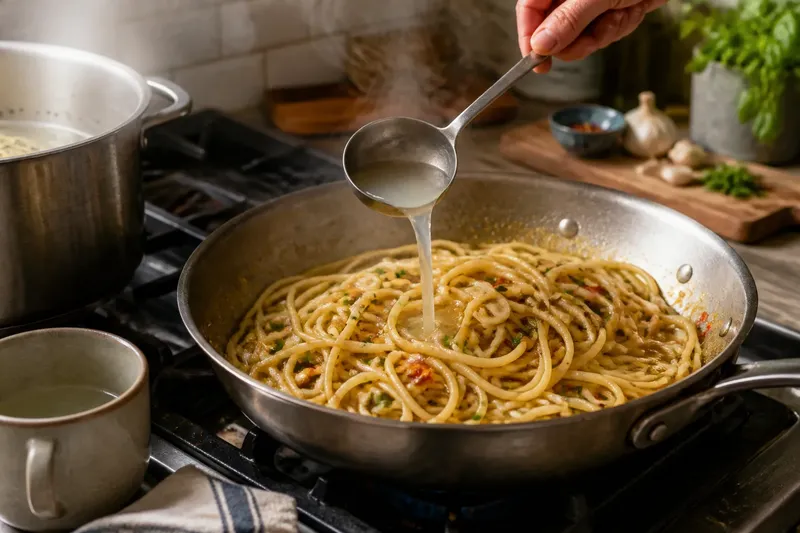
You drain a pot of pasta, tip the noodles into a pan of sauce, and watch a slick of oil gather at the edges. Why pasta water helps a sauce cling is partly a matter of starch: a small splash can help dispersed fat and liquid stay together, coating the noodles instead of pooling beneath them. The amount you add, and when, can shift a sauce from loose to glossy—or make it watery.
What does pasta water do in a sauce?
As dried or fresh pasta cooks, some starch leaves its surface and enters the water. That water also contains salt if you salted the pot. It is therefore a useful cooking ingredient, not just a place to hold noodles, though its starch concentration can vary with the pasta, pot, and amount of water.
Starch thickens liquid as it heats and helps suspend tiny droplets of fat through that liquid. In a sauce, this can support an emulsion: a mixture in which fat and water-based ingredients are dispersed together rather than separating quickly. Pasta water does not create an emulsion by itself; heat, stirring, and the sauce’s other ingredients matter too.
Think of starch as a soft bridge between ingredients that would otherwise part company. Like a little paste helping two pieces of paper stay aligned, it can give the sauce enough body to hold to the pasta’s ridges and curves. The goal is not a thick coating that hides the noodle, but a light, even film.
Which approach suits your sauce?
There are three useful approaches: add pasta water directly to the sauce, finish the pasta in the sauce, or reserve the water without using it unless the pan needs adjustment. Each serves a different cooking situation.
Add water directly to the sauce
This suits a sauce that is already nearly ready but looks tight, greasy, or uneven. Stir in a small splash of hot pasta water and watch the surface. If the sauce loosens and turns more cohesive, stop; if it still looks separated, stir and add another small splash.
This approach works well with olive oil, butter, grated cheese, or a pan sauce made with cooking juices. It gives you a way to adjust consistency without pouring in a large amount of plain water at once. It is less useful if the sauce is already thin or if its flavor depends on remaining concentrated.
Finish the pasta in the sauce
This suits a quick sauce that can coat the pasta while both finish cooking together. Transfer the pasta when it is nearly tender, add it to the pan with a little cooking water, and toss over gentle heat. The pasta releases a little more starch as it finishes, while its surface takes up sauce.
Keep the pan moving with tongs or a broad spoon. If the sauce tightens before the pasta is ready, add a splash of water and continue tossing. This method is especially handy for a simple tomato sauce, a butter-and-cheese sauce, or garlic and oil, but it needs attention because the pasta can become too soft if left to cook too long.
Save the water as a reserve
This suits a sauce that already has the right consistency, or a recipe where adding liquid too early could dilute its flavor. Reserve some hot water before draining, then use it only if the noodles and sauce need help coming together. If the sauce is already glossy and coats the pasta evenly, there is no need to add any.
This is also a good choice when the sauce contains delicate ingredients that should not be stirred over heat for long. Keep the reserved water nearby, but make the decision by looking at the pan rather than following a fixed amount.
How should you add pasta water?
Use a mug or heatproof measuring cup to reserve water before draining; a ladle works if it is easy to handle safely. Add the water in small splashes, then toss or stir before deciding whether the sauce needs more. A steady pour can make it hard to recover if the sauce becomes thin.
For an oil-based sauce, combine the oil and water over moderate heat while tossing the pasta. For a butter sauce, lower the heat before adding cheese, since a very hot pan can make cheese clump or turn stringy. With tomato sauce, a splash can loosen a concentrated pan sauce, but too much can flatten its flavor.
Watch for three signs: the fat no longer forms a separate slick, the sauce moves smoothly when you tilt the pan, and the noodles carry a thin coat after tossing. If a puddle collects at the bottom, keep tossing briefly over gentle heat before adding anything else. If the pasta looks dry or the sauce drags rather than flows, add another modest splash.
Say you have spaghetti with garlic, olive oil, and chili, and the oil gathers in shiny patches after the pasta goes in. Add a small splash of reserved water and toss the pan; if the liquid and oil form a more even coating, stop there. If the noodles still look dry, add another splash and toss again, checking the texture each time.
Why does the water sometimes fail to help?
Very dilute cooking water may offer little thickening power, especially if the pot held plenty of water or the pasta released little starch. It can still loosen a sauce, but it may not help the fat and liquid stay combined as effectively. A spoonful of starchy water from a more concentrated pot can behave differently from a large pour of weak water.
Too much water can make a sauce runny and wash away its seasoning. Too much heat can also drive off liquid before the ingredients have a chance to combine, while an idle pan may let oil separate again. Adjust with small additions, active tossing, and moderate heat rather than trying to correct the sauce with a large last-minute pour.
Salt matters as well. Pasta water can be salty, and cheese, cured meat, olives, or seasoned stock may already bring plenty of salt to a sauce. Taste before adding more salt at the end, particularly if you have used several salty ingredients.
Which pasta-water questions come up most?
Can you use water from gluten-free pasta?
Yes, if it is starchy and suits the sauce, though its thickness and behavior can differ by pasta ingredient. Reserve a little and judge what it does in the pan rather than assuming it will behave like wheat-pasta water.
Should the water be boiling when it goes into the sauce?
It should be hot, but it does not need to be at a rolling boil. Hot liquid blends into a warm sauce readily; add it carefully so it does not splash, and reduce the heat if the pan is bubbling hard.
Can pasta water replace cream?
No. It can help an oil-, butter-, cheese-, or broth-based sauce become more cohesive, but it does not provide cream’s richness or flavor. Treat it as a texture-adjusting ingredient, not a like-for-like substitute.
What if you forgot to reserve it?
Use a little warm water if the sauce needs loosening, but expect less starch-driven help. Add it gradually and keep tossing; a small amount of unsalted water is easier to manage than a large pour.
How can you choose the right method?
Start with the sauce’s current state. If it already coats the pasta, leave it alone. If it is too thick or looks separated, add a little pasta water and stir or toss. If the pasta needs a final moment of cooking, finish it in the sauce with a splash. If you are unsure, reserve the water and wait until the pan shows you a reason to use it.
That is the practical value of pasta water: it gives you a flexible way to tune texture while the dish comes together. Add it in small amounts, keep the pasta moving, and stop as soon as the sauce clings lightly to each strand or piece.